Why an Open Hour Can Change the Shape of a Festival Day
An open hour in your festival schedule gives shifting interests and unexpected discoveries room to fit without turning the day into a race.
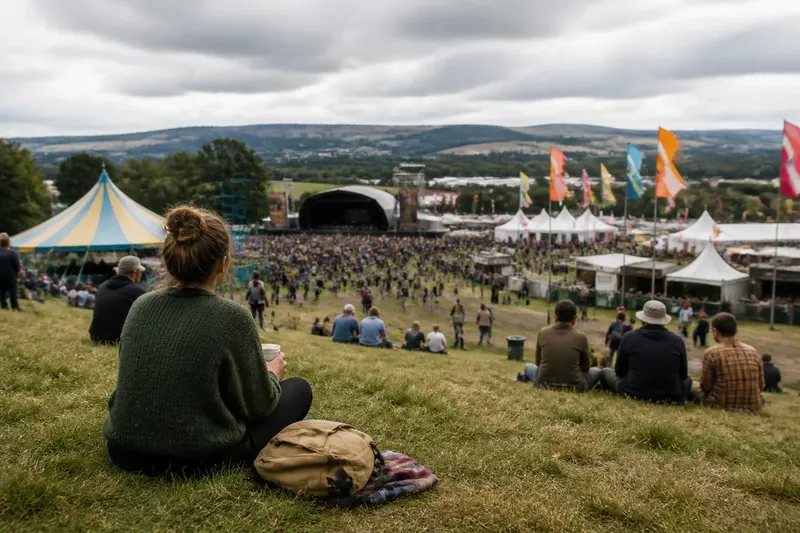
An open hour in a festival schedule gives a day somewhere to bend. If a set runs long, a conversation sparks interest, or a small performance catches your attention, that unclaimed time lets you respond without immediately sacrificing the next thing you came to see.
The useful question is not whether every visitor should leave the same amount of time free. It is which part of your day is most likely to change, and what you would rather do if it does. A flexible block works best when it has a purpose: room to follow a discovery, recover from a crowded stretch, or make a decision after you know how the site feels.
Choose by your plans
Start with the shape of the visit, not a rule about how many events to schedule. A short visit with one main performance may need little open time. A full day with several interests, different stages, and no firm ending benefits more from a block that can absorb surprises.
These situations point to different choices:
- You have one firm event. Keep the rest of the schedule light, especially around its start and finish. An open block before it can accommodate delays or a nearby discovery; after it, free time is useful only if you want to stay and explore.
- You are attending several performances. Leave a block where the schedule is least certain, rather than wedging one between every event. You will have a natural point to decide whether to continue, linger, or change direction.
- You are visiting with a group. Reserve time for a shared decision, particularly if people have different interests or move at different speeds. Agree on a meeting place and a time to check in; an unclaimed block is less helpful if nobody knows where the group has gone.
- You prefer a quiet, deliberate visit. Treat the open hour as part of the plan, not as a gap you are expected to fill. It can be used to sit, listen from the edge of a crowd, or take a slower route between areas.
Say you have booked an afternoon dance performance and marked a craft demonstration as a possibility. If the demonstration is absorbing, you can stay through its end and use the open block before the performance to find the venue and settle in. If it is not for you, the same time remains available for a food stall or a quiet seat. The point is that the schedule gives you a choice at the moment you have better information.
Place the open hour
Put free time beside the part of the schedule most likely to create a decision. That may be after a performance you are unsure about, before an event across the grounds, or late in the day when you will know whether you still want more activity. Placing it well matters more than drawing a large blank on the page.
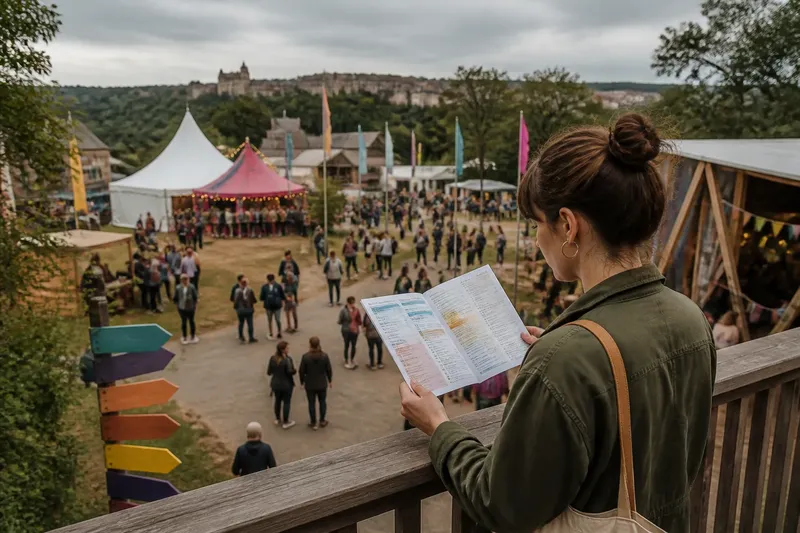
Do not use the open hour to pretend that travel between venues takes no time. A festival site can involve queues, narrow paths, or a long walk from one stage to another. Check the program map and allow the site’s actual layout to influence where the open block goes; the schedule should work like a roomy drawer, not a tightly packed suitcase.
If an event has a fixed start, keep the time immediately before it as predictable as you can. An open block earlier in the day gives you options without making arrival feel uncertain. If the event is the main reason for your visit, protect it from an appealing but poorly timed detour.
Decide what it can hold
An open hour does not need a prewritten activity, but it helps to know what kinds of use would suit you. Choose a few broad possibilities rather than assigning the block a second schedule:
- Follow a performance or demonstration you noticed while walking.
- Stay longer at an event that has become more interesting than expected.
- Find a seat, eat, or take a quieter pause away from a busy area.
- Explore a nearby part of the site without committing to a timed event.
- Make a fresh choice with your companions once everyone knows how the day is going.
These options are not a new list of obligations. If you write down every possible use and then try to complete them all, you have rebuilt the packed schedule under a different name. Leave the block open enough that declining an activity remains an acceptable choice.
When should you leave time free?
What if my favorite event has a fixed start?
Keep the period before it relatively clear and place your open time elsewhere. That preserves room to explore without making the event you care about depend on a last-minute dash.
What if I only have a short visit?
Choose one open pocket near the least predictable part of the visit instead of reserving a large block by habit. A brief pause can still let you respond to a discovery or adjust after seeing how the venue feels.
What if I am attending with children or a group?
Use the free block for a shared reset or a decision about what happens next, and agree on a clear meeting point. If the group separates, the open time should not become an open-ended search for one another.
What if nothing catches my interest?
Let the time remain quiet: sit, eat, or leave the area for a calmer spot. Free time does not need to produce a discovery to have been useful.
Keep flexibility bounded
Some schedules have more room to move than others. An outdoor program may shift with conditions, while a ticketed performance or workshop may have a set entry time. Follow the event’s own instructions and any venue or local rules when deciding which commitments can move.
For the rest, set a simple boundary: choose a point in the day to look at the schedule again, rather than checking it after every short activity. At that pause, decide whether to head toward a planned event, stay where you are, or use the open block for rest. This keeps flexibility from turning into constant negotiation.
It can also help to tell companions which event, if any, you do not want to miss. That makes it easier to say yes to an unexpected discovery without quietly worrying that it will consume the whole visit. If your priorities differ, agree on a meeting point and let people choose separate activities during the open time.
Make the space deliberate
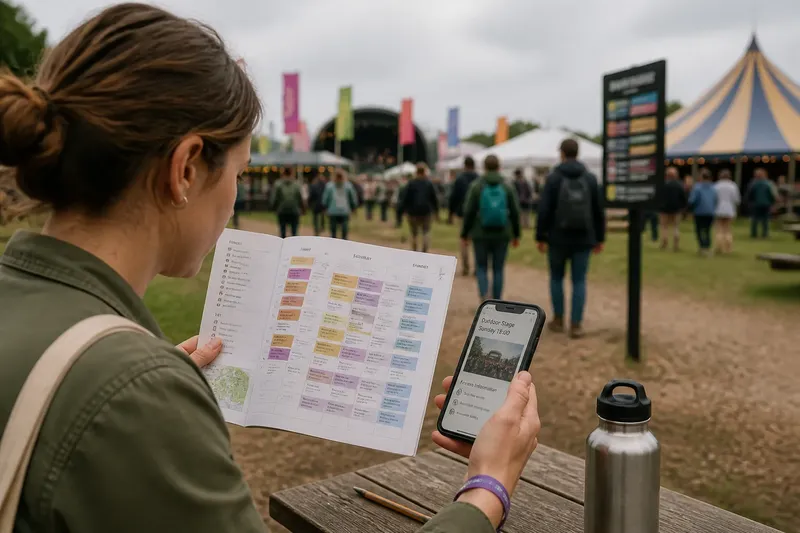
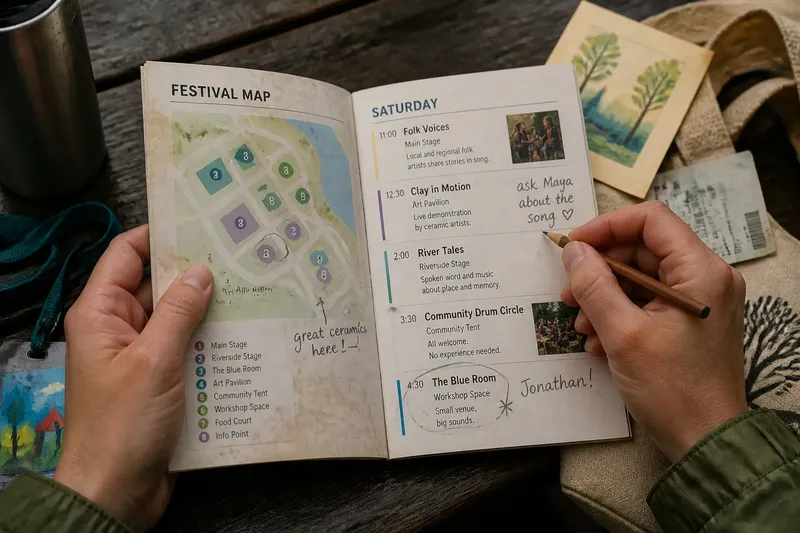
When laying out your festival schedule, mark the open hour plainly rather than leaving it as an accidental gap between entries. Add a short note such as “choose nearby” or “rest and decide.” The note signals that the time has a job, while leaving the job flexible.
An open hour in a festival schedule is most useful when it sits beside uncertainty, protects the commitments you care about, and stays free of hidden demands. Choose the part of your day that is most likely to change, make room there, and let the next decision wait until the festival gives you something worth responding to.