The Myth of the Must-See List
A festival must-see list can turn a day into an obligation. Learn how to choose events that matter to you and decline the rest without guilt.

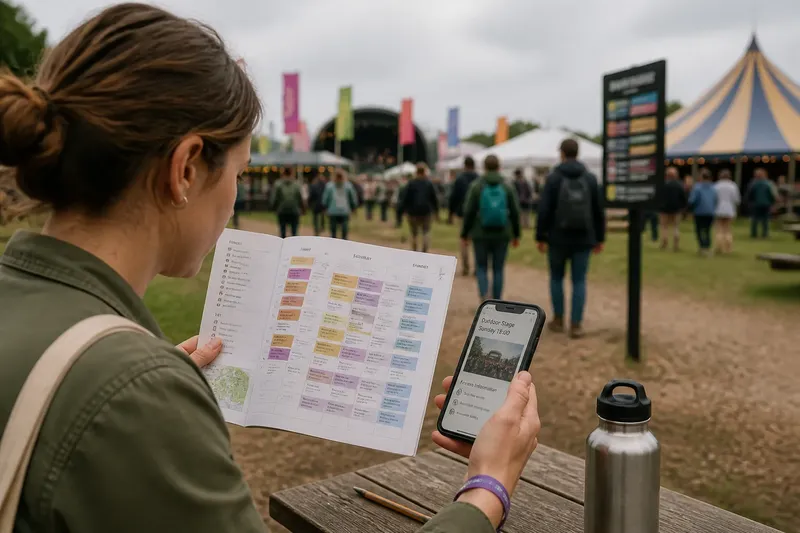
A festival must-see list can make a performance feel like an appointment you have to keep, even after you stop wanting to be there. The better etiquette is to treat performers and fellow attendees with attention while giving yourself permission to change your mind. Your program is information, not a contract.
That distinction matters most when other people’s enthusiasm starts to sound like an instruction. A friend’s recommendation or a popular listing can be worth considering without outranking your own interests. The program is a menu, not a tray you must finish.
Choose on your terms
Before the festival, look through the program for events that genuinely interest you. Ask what you hope to see, hear, make, or learn. If the answer is mostly that you fear missing out, keep the event optional rather than treating it as a duty.
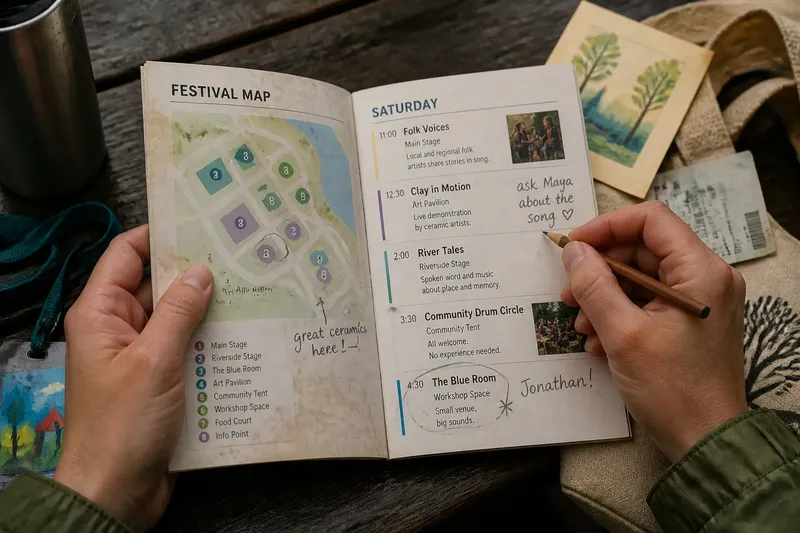
For each event you are considering, check the organizer’s listing for its location, entry conditions, and any arrival guidance. If the information says entry is limited or timed, decide whether that event matters enough to plan around; if entry is open, treat it as an option rather than an obligation. A saved listing or a mark on a paper program is enough to remember the details.
Say you have an invented, hypothetical choice between a dance performance you have wanted to see for weeks and a drop-in printmaking session that sounds pleasant. You check the program and learn that the dance has a fixed start while the workshop accepts visitors during its posted hours; you choose the dance, then decide at the time whether you still want printmaking. The result is a deliberate choice, not a promise to attend both.
Decline without apology
A recommendation is an invitation, not a test of loyalty. If a friend suggests a show you do not want to attend, thank them and say you have another plan. If you genuinely want to hear about it later, ask them to tell you what they thought; there is no need to invent a detailed excuse.
When companions want different things, agree on a clear meeting point and a way to check in before separating. If everyone is comfortable splitting up, each person can follow their own interests; if someone needs company or assistance, choose an event together or make another shared plan. That small conversation is more useful than silently expecting everyone to follow the same itinerary.
Change course courteously
You may decide an event is not for you after it begins. If you leave, avoid blocking a path or view, and follow any directions from staff. At a seated performance, wait for a natural pause if practical; at a crowded entry, do not save places for people who have not arrived.
Not every change needs an announcement. A quiet departure is usually enough, and it is more considerate than staying while talking or distracting others. If the venue has specific entry or exit rules, follow the information supplied by the organizer.
Questions about choices?
How do I know whether an event is right for me?
Identify what interests you about it, then check the program for its format and entry conditions. If the appeal is genuinely yours, consider going; if the main reason is pressure from a friend or a popular listing, you can leave it optional.
What should I say when I decline?
Thank the person and state your decision plainly, such as, “Thanks for suggesting it; I’m going to skip this one.” If you want to keep the conversation going, invite them to tell you about it afterward.
What if my group disagrees?
Ask whether everyone wants to stay together or would prefer to split up, then agree on a meeting point and check-in method. If separating does not work for someone in the group, choose a shared activity without framing it as a contest.
Is it rude to leave during a performance?
Leaving quietly is generally more considerate than remaining while distracted, but the venue may have particular conventions. Check the organizer’s guidance and follow staff directions; avoid obstructing other attendees as you leave.
Check before committing
Before deciding, use the program and the people around you as practical sources of information. For each item below, the observation leads to a choice rather than another obligation:
- Check whether the event listing says entry is timed; if it is, decide whether to attend at the stated time, and if it is not, keep it as a flexible option.
- Check whether the listing says capacity is limited; if it is, follow the stated entry process, and if it is not, decide based on your interest rather than assumed scarcity.
- Check whether the event location is clear on the program; if it is, use the map to find it, and if it is not, ask festival staff before setting out.
- Check whether your companion wants the same activity; if they do, agree on where to meet afterward, and if they do not, agree on whether to separate or choose something together.
- Check whether staff have posted a change to the event; if they have, follow the updated directions, and if they have not, use the original listing rather than relying on a rumor.
- Check whether you are still interested once you arrive; if you are, stay and give the event your attention, and if you are not, leave courteously or choose another activity.
A festival must-see list is useful only when it reflects what you care about. Choose based on the program, your actual interest, and the people with you; when the answer changes, let your decision change too. A courteous no leaves room for someone else to enjoy the event, and for you to spend your attention where you want it.