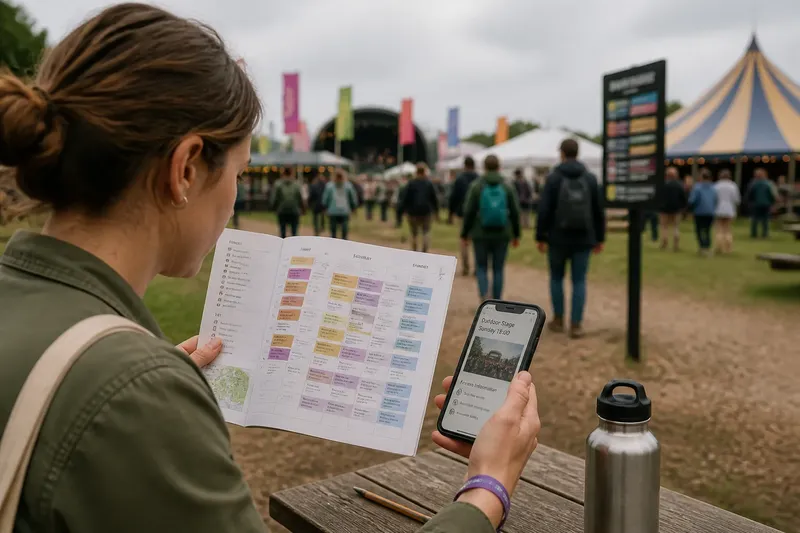
Why a Festival Program Becomes a Keepsake
A festival program becomes a keepsake when its pages capture choices, names, and small details from your day—and thoughtful storage helps preserve that record.
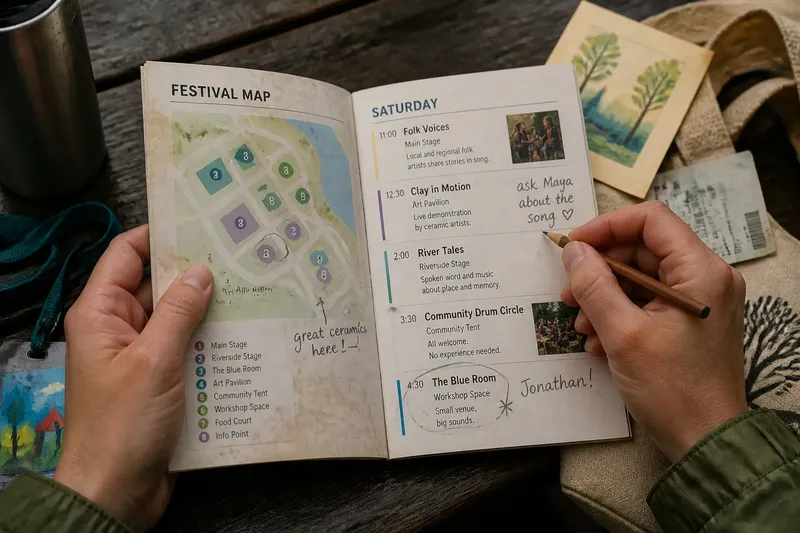
A festival program becomes a keepsake when it carries details of your day that a clean copy cannot: a penciled name, a marked page, or a map folded toward the place you visited. If you are deciding what to save, look for those personal traces rather than treating every piece of festival paper as an heirloom.
Personal traces
The most useful keepsake is often not the most polished one. A circled performance, a note from a friend, or a crease where you kept opening the same page can connect the printed object to a particular choice you made.
That connection gives the program a different job after the festival. It no longer needs to direct you through the day; it can serve as a modest record of what caught your attention and what you chose to follow.
Notes worth keeping
Small, legible marks can carry more meaning than a long account written later. If you want to add a note, record a name or a brief cue while it is fresh, such as “blue room” or “ask Maya about the song.” A pencil works well for notes that may need correction; avoid writing over printed details you may want to read later.
Say you attend a neighborhood arts festival and hear about a ceramic artist from someone outside a gallery. You write the artist’s name beside the gallery listing and mark the gallery on the map. At home, the name and location give you a clear reminder of how you found the work, without requiring a full diary entry.
Choosing what to save
A quick review helps separate a meaningful copy from a duplicate that served only as a handout. Check the program itself and decide what to do based on what you see:
- Check for handwritten names or notes; if they connect to a moment you want to remember, keep that copy, otherwise consider recycling it.
- Check for a marked map or page; if it records places you visited, save it, otherwise let an unmarked duplicate go.
- Check whether the cover identifies the festival and its year; if that context matters to your collection, keep it, otherwise retain only pages with personal marks.
- Check for a page tied to an artist, workshop, or local tradition you encountered; if it helps recall the experience, keep that page or the whole booklet, otherwise discard the unused copy.
- Check for a friend’s message or recommendation; if it preserves a connection you value, keep it, otherwise do not save the program solely because it was handed to you.
- Check for dampness, food residue, or loose pieces; if the paper is dry and intact, store it normally, but if it is damp, let it dry fully before placing it with other papers.
These decisions need not be permanent. You can keep the marked program for a while and reconsider later; the point is to choose based on its contents rather than on the vague possibility that every leaflet might someday become important.
Careful storage
Before storing a program, remove loose items such as ticket stubs and let any damp paper dry in a clean, open place. Store it flat in a folder or box, away from harsh light and moisture. If it is too large to lie flat, fold it along existing creases rather than making new ones, and avoid pressing it under heavy objects.
Keep notes about the event with the program only if they will not damage it. A separate slip of archival paper can hold a date or a friend’s name without adhesive. Do not use tape or glue on a copy you hope to preserve; repairs can leave marks and may make later handling harder.
Print and digital copies
A printed program can retain its texture, folds, and handwriting, while a saved digital version can preserve readable text and images without taking up shelf space. They serve different purposes. If you want the information but not another paper object, save the festival’s official file or photograph the pages that matter, respecting any access or sharing restrictions attached to them.
A digital copy does not reproduce the feel of a program carried around all day, and a printed copy may not be easy to search. Keeping both is useful only when each adds something you want; otherwise, choose the form you are more likely to revisit.
Festival program keepsake questions?
Why keep a festival program?
Keep one when its notes, marks, or design help you recall a specific part of the event. An untouched duplicate with no personal or reference value can usually go.
Which pages should I save?
Choose pages with a marked location, an artist’s name, a useful note, or an image that identifies the festival. If those pages are easy to separate without damage, keep them in a folder; otherwise, retain the booklet intact.
How should I store a marked program?
Let it dry, remove loose objects, and place it flat in a clean folder or box away from moisture and harsh light. If its paper or binding has special care instructions, follow the printer’s guidance.
Should I keep every program?
No. Keep the copy that records a particular visit or holds information you expect to use, and let duplicates go when they add nothing. A shelf is not improved by paper that has forgotten why it is there.
Keep the useful trace
A festival program keepsake does not need special decoration or a formal display. Its value can rest in the ordinary evidence of use: a name beside a listing, a page folded to mark a place, or a note that brings back a conversation.
Before putting one away, add only the context that would otherwise disappear, such as the festival name or who attended with you. That small note can make the object easier to understand later, when even a familiar program has become just another folded sheet.